
Writing is often one of the most difficult subjects for people to teach. This is probably because writing is an art, though many seem to treat it as a science. There is no magical formula for teaching writing and instruction can be nuanced. But if you get yourself into the habit of teaching with intention, it can be much easier and way more effective.
There Has to Be a Better Way
Many districts have weak writing programs or no writing programs at all. It is up to the teacher to come up with a method that works for teaching writing. You can plan writing lessons for your students yourself and then consult your programs and supplements to find the best strategies and resources to support you… but it really comes down to having a clear focus and realistic expectations along with a solid framework for modeling good writing and guiding students through the process.
Teaching Writing with Intention
Step #1: Start at the END
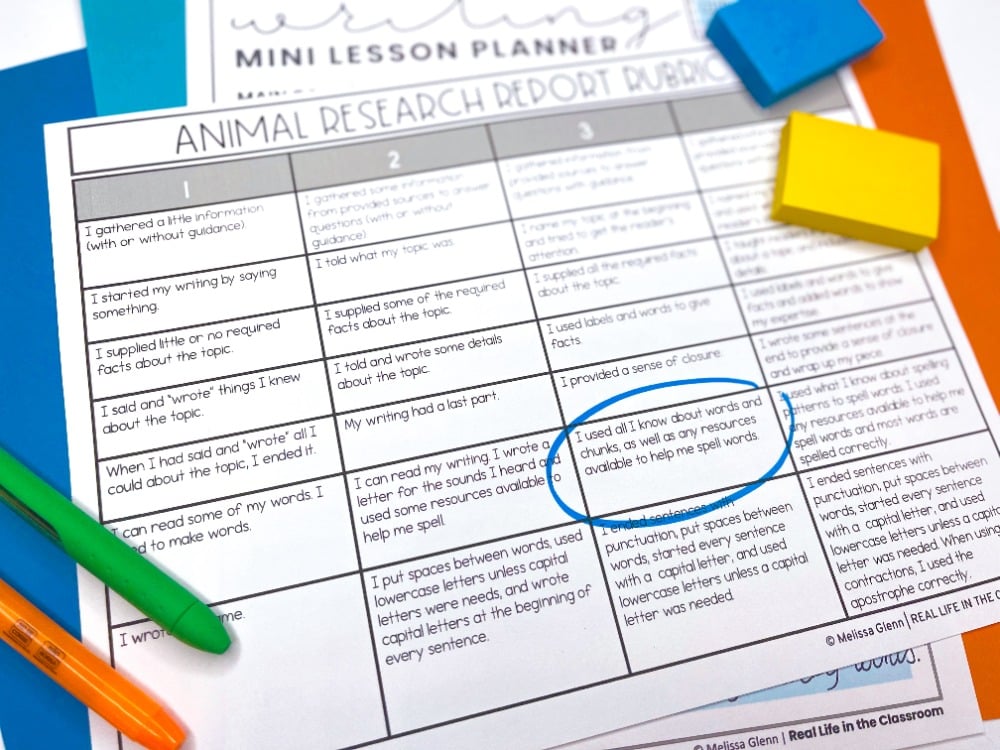
Start at the end. Grab your writing rubric and start there. If your district has one, use that. If they don’t, create your own… and do it BEFORE you do any lesson planning. Look at the expectations of students. Choose ONE part to focus on. Don’t try to teach everything all at once.
Step #2: Assess Your Students’ Strengths and Weaknesses
Think about what your students already know. You can consult previous writing pieces or give a quick assessment to see. Where are MOST of the students operating? Tailor your mini lessons to the majority and plan to meet individual needs in small groups or conferences. Think- What are most of my kids already doing well? Don’t waste time with that during whole group lessons. Think- What needs work? That’s your focus- your objective.

Step #3: Plan for Teaching Writing
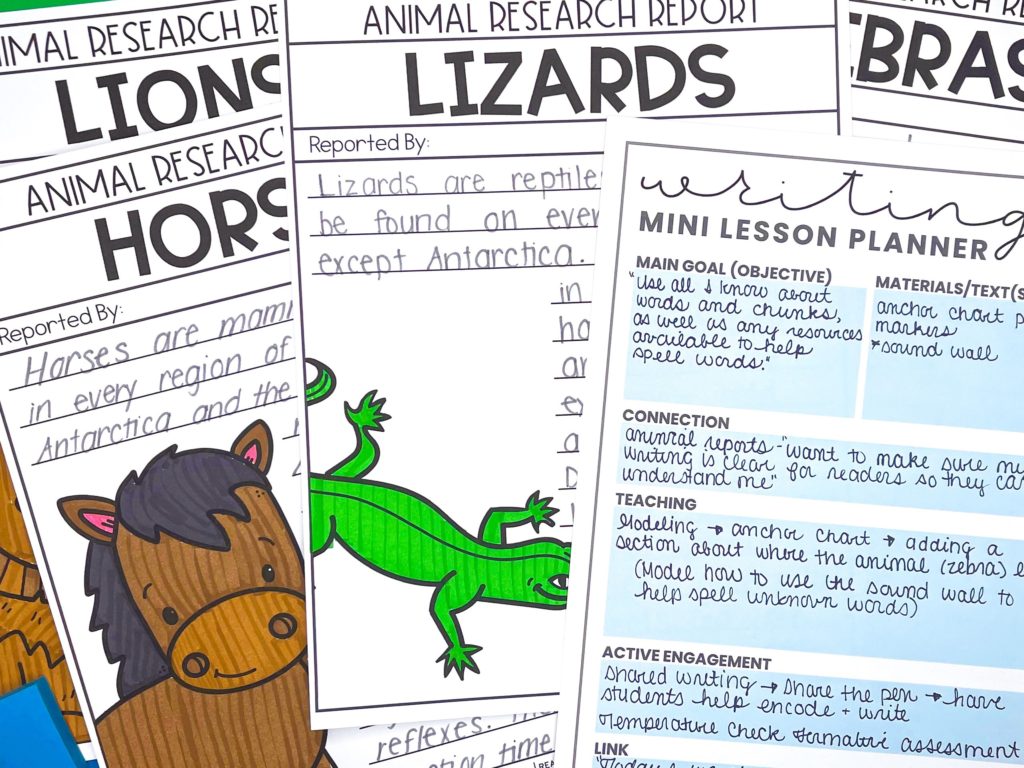
Once you have a refined target, how will you teach it? Especially with younger kids, plan to model, model, model. Children need to see what it looks like to understand what you are looking for. Also, consider mentor texts and other activities that could help you teach the objective.
Remember a mini lesson is MINI. Keep it short and to the point. I never dreamed I could keep mini lessons brief but I did it. FOCUS. Think about a piece you can model for the kids. Don’t get too in depth- you don’t have time for that kind of planning or executing. 10 minutes goes quickly!

Step #4: Check Your Inventory
Think about what you will need to teach the lesson and jot down a brief list. Get in the habit of gathering the materials the day before your lesson so they are ready to go. This will save you a ton of aggravation- especially if you tend to wait until the last minute to find that the mentor text you were planning to use is lost or already checked out of the library by someone else. #beenthere
Step #5: ABC- Always Be Checking
Have a system for checking and assessing whether students understood what you were trying to teach and take anecdotal notes. (They don’t have to be fancy!) During conferences have students read their writing and make a note of where they “are” in terms of what you are trying to teach.
You don’t necessarily have to teach to the lesson- especially if a student is struggling with other skills that are significantly impacting the readability of their writing. Meet each student where they are- but nudge them towards where you want to go. And remember- conferences are BRIEF check-ins.
Bring it All Together
Planning your own lessons for teaching writing can be overwhelming, especially if you don’t already have a process in place for doing so. It doesn’t need to be complicated.
Remember:
- Start at the end by grabbing your writing rubric and picking ONE general focus.
- Assess your students’ strengths and weaknesses to refine your focus into a targeted objective that meets the needs of the majority of your students. (You should plan to offer individualized support for struggling students or opportunities for extension for advanced students during conferences or small groups).
- Plan your teaching by considering the best way to get your point across in a brief and meaningful way. (Those attention spans are short!)
- Check your inventory and gather needed materials BEFORE your lesson starts.
- ABC- Always Be Checking to see if and how students are meeting the goals.
You CAN Making Teaching Writing More Streamlined
This process should not be complex but as with anything new it might take getting used to, especially if you are used to just following a script in a program. But if you take the time to plan, you can feel good about tailoring the instruction to your student’s needs.
It’s easy to get wrapped up in materials- but at the end of the day, YOU know what your students can do. YOU know what you want your students to be able to do. YOU CAN develop your own writing lessons.
Grab my FREE Mini Lesson Planner for Teaching Writing
You can grab my Writing Mini Lesson Planner for FREE to help you plan out your lessons for each day of the week! My guide will help you stay on track and be mindful of trying not to get lost in the details.
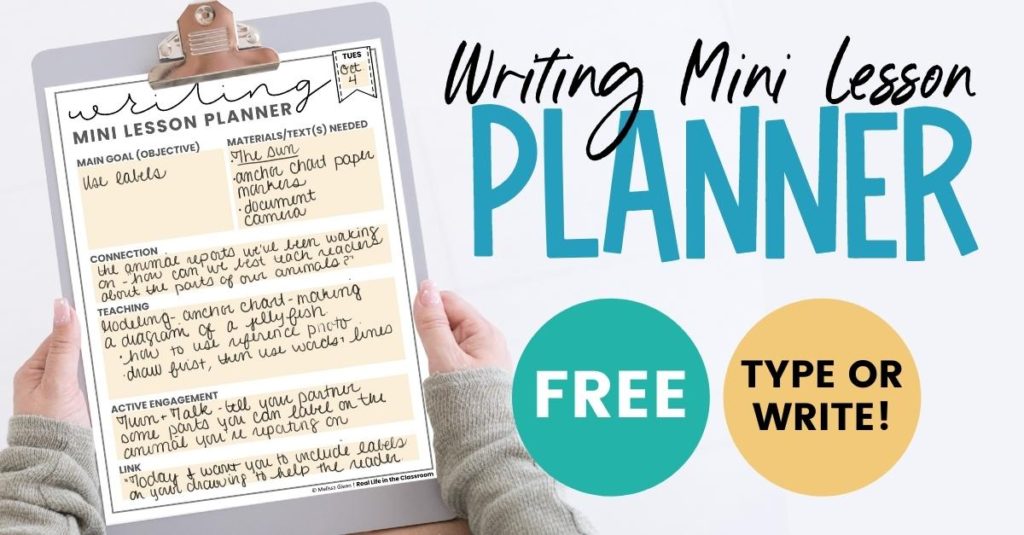
Click the image above to grab the free planner you can use when planning for teaching writing!


