
Tracking student data is a big thing nowadays, and it can be extremely helpful in planning future lessons. A great way to make the learning more accessible for students is to include them in the data collection process in a child-friendly way. (Plus, it’s a great artifact for your Domain 4 binder, IYKYK!)
Why Get Kids Involved in Tracking Student Data?
Tracking student data involves assessing them throughout the year and recording the data to monitor student growth and progress. Getting students involved in data tracking gives them ownership over their learning.
Guiding your students through tracking data isn’t as difficult (or as boring) as it sounds. I’m going to show you how you can guide students through tracking data related to their growth in reading right from the beginning of the school year.
How to Involve Kids in Tracking Student Data
Step #1: Choose a Way to Measure Growth
Decide on a measure. Does your district use guided reading levels? Lexile? DRA? Foundational skills? The first step is choosing how you will compare growth and what assessment you will use to do so. Be sure to pick something you will be able to use throughout the year!
Step #2: Set Reading Goals
Have your students create reading goals for themselves and guide them toward thinking about actionable steps they can take to meet those goals.

Step #3: Create or Find a Kid-Friendly Way for Tracking Student Data
Think of a way you can have students track their data in a way that will make sense to them. Visuals go a long way in helping students understand information better. Brainstorm a list of ways you can have students track data using a student-friendly graph or chart, and then pick the one you think will be most impactful and most easy for students to use.

Step #4: Assess Early On
Assess students before any reading instruction to establish each of their starting points. Have students record their initial score/information on their graphs or charts. You may choose to do this in small groups or during conferences.

Be sure to encourage a growth mindset and help your students understand that everyone starts somewhere, and everyone has a different journey!
Step #5: Monitor with Assessments Throughout the Year
Decide how often you can reasonably expect to assess your students. For example, you may choose to give a more formal reading assessment quarterly with smaller check-ins happening every month.
Whenever you assess your students, remember to have them update their graphs or charts. Do not forget to record the data for yourself!

Step #6: Celebrate Growth and/or Offer Encouragement
Having a visual representation will help students better understand how they are progressing. Kids get very excited when they can see just how much they have improved!
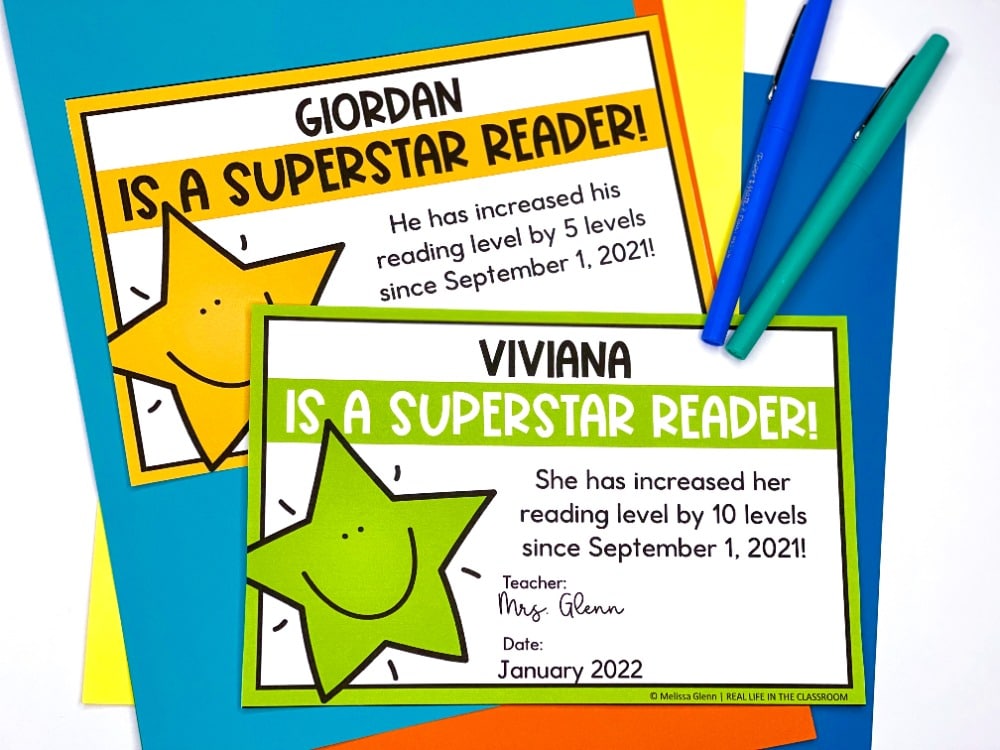
However, there may be times when students do not progress the way we had hoped they would. Be prepared to support students and explain that this is why we track this data- it’s a signal that we just need to try something different! Revisit their goals and planned actionable steps and look for ways to improve.
Step #7: Share with Families
Keep your students’ graphs and charts available during conferences. The families of your students will love seeing that their child was involved in the process of measuring their growth!

Involving Students = Greater Buy-In
Involving students in the process of measuring growth helps children understand WHY they are learning what they are learning and doing what they are doing. They are more invested and therefore more likely to want to work harder to meet their goals.
Having students track their data is not only valuable as it helps them be accountable for their learning but it also reinforces other skills, such as graphing!
A bonus: Administrators LOVE seeing this kind of thing happening in classrooms!
Celebrate Your Students’ Growth with Free Reading Certificates
A great way to excite and motivate students is by providing certificates celebrating their reading growth while tracking student data! I love that these are individualized for each child… focused on celebrating growth and not just on meeting a one-size-fits-all level.
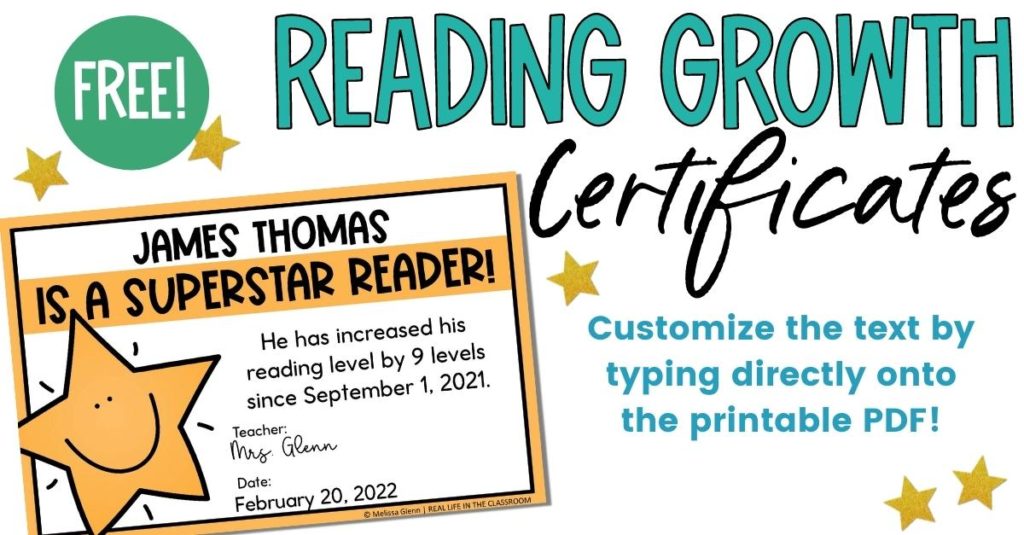
These certificates include editable text so you can customize them to best meet your needs and work with whatever system you have created to measure your students’ progress in reading. Click the image above to grab your free reading growth certificates to use when celebrating and tracking student data!


